Feeds:
Posts
Comments

Posts Tagged ‘Maggie’s Kitchen’

Cake is happiness!  If you know the way of the cake, you know the way of happiness!  If you have a cake in front of you, you should not look any further for joy!  ―  C. JoyBell C.

Since it’s been far too long since I published a recipe, I decided to make up for it with seven new ones: all different types of cake, arranged one per demi-season.  Yesterday we covered winter and spring, and today cakes for the summer and autumn.  I would only consider one of these (Moss Rose Cake) difficult, and even it isn’t all that tough.  But if you aren’t an experienced baker, make sure you read my general tips in yesterday’s column before proceeding.

Summertide (late May – early July)

Texas BrowniesI first discovered this recipe in the early ‘90s, and I don’t know why they’re so named; maybe because they’re big, or maybe it’s the buttermilk, but they’re delicious in any case.  If you don’t have buttermilk handy, put 2 teaspoons (10 ml) of lemon juice or vinegar into a glass measuring cup, pour milk in until it’s just below the ¾ cup (180 ml) line, stir, and let it sit for 5 minutes before using (the usage is divided between cake & frosting, so be sure to measure).  Note that the coffee need not be freshly brewed; I always use whatever’s left from breakfast.

Texas Brownies

2 cups (480 ml) flour
2 cups (480 ml) sugar
1 teaspoon (5 ml) baking soda
¼ teaspoon (1 ml) salt
1 cup butter (2 sticks)
1/3 cup (80 ml) cocoa powder
1 cup (240 ml) coffee (the stronger the better)
2 eggs
½ cup (120 ml) buttermilk
1½ teaspoons (8 ml) vanilla extract
1 recipe frosting (see below)

Preheat oven to 350o Fahrenheit, grease a 13” x 9” baking pan and sift together flour, sugar, soda and salt.  In a medium saucepan over medium heat combine butter, cocoa and coffee, stirring constantly until it boils.  Add the chocolate mixture to the dry mixture and beat with an electric mixer at medium to high speed until well-combined.  Add eggs, buttermilk and vanilla and beat for 1 minute more, then pour into the pan (batter will be thin).  Bake for 35 minutes or until a wooden toothpick comes out clean, then remove from oven and immediately prepare frosting.

¼ cup (½ stick) butter
3 tablespoons (45 ml) cocoa powder
3 tablespoons (45 ml) buttermilk
2¼ cups (540 ml) sifted powdered sugar
½ teaspoon (2.5 ml) vanilla extract

In a small saucepan over medium heat combine butter, cocoa and buttermilk, stirring constantly until mixture boils.  Pour over powdered sugar in mixing bowl, add vanilla and beat until smooth, then pour over hot cake.  Allow cake to cool thoroughly in pan, then cut into squares.

Lammastide  (July and the Dog Days)

refrigerator cakeIt’s true that sheet cakes aren’t as fancy as layer cakes, but unless you’re trying to impress company they taste the same.  Here’s another cake Maman used to make; it’s wonderfully refreshing in an oppressively-hot Louisiana summer.  Just bake a white cake in a 13” x 9” pan, and when it’s cool use a wooden skewer to poke holes at about 1-cm intervals over the whole top of the cake.  Pour the proper amount of boiling water over two regular-size packets of any flavor of dessert gelatin (in the US this would be two cups [480 ml] of water ) and stir until dissolved, about 2 minutes.  But do not then add cold water as one normally would when preparing the gelatin; instead pour it evenly over the top of the cake and set it in the refrigerator for at least four hours before cutting.

Mabontide  (September and late August)

To make up for all those homely cakes, here’s a very fancy one that’s my husband’s all-time favorite.  It isn’t just two layers, but three!  Usually I add green and red food coloring to the frosting to get a sort of mossy color in keeping with the name.  The fresher the eggs, the lighter and fluffier the result with this cake; farm-fresh eggs give the best result.  It’s also much easier if you have a stand mixer.

Moss Rose Cake

2 cups (480 ml) sifted flour
½ teaspoon (2.5 ml) salt
2 teaspoons (10 ml) baking powder
4 eggs
2 cups (480 ml) sugar
½ teaspoon (2.5 ml) almond extract
1 cup (240 ml) hot milk

beaten whole eggsLet eggs sit at room temperature for half an hour while you grease and lightly flour three 8” or 9” round cake pans, then sift flour, salt and baking powder together three times.  Preheat oven to 350o Fahrenheit.  Beat eggs and almond extract on high speed for about five minutes, gradually adding sugar, until very thick; the mixture will cascade from the beater in a thick ribbon and mound up on the batter’s surface, then slowly vanish into it.  Gently fold flour mixture into egg mixture, then gradually add hot milk and stir quickly until the batter is smooth.  Divide evenly between the three pans and bake for 30 minutes, until the top springs back when lightly touched.  Cool layers in pans for 20 minutes while preparing frosting.

7-minute Frosting 

1½ cups (360 ml) sugar
1/3 cup (80 ml) cold water
2 egg whites
¼ teaspoon (1.25 ml) cream of tartar
1 teaspoon (5 ml) almond extract
Food coloring

In the top of a double boiler combine sugar, water, egg whites and cream of tartar and mix with electric mixer on low speed for 30 seconds.  Place over boiling water and cook for seven minutes, mixing on high speed the whole time, until frosting forms stiff peaks.  Remove from heat, add extract and color, and beat for 2 or 3 minutes more until frosting reaches spreading consistency.  Carefully remove layer from pan, frost and stack layers, frost the whole cake and then sprinkle the top with ground pistachios (about ¼ or ½ cup of nuts ground up in a food processor should do it).

Autumntide  (October and November)

This is a simple but delicious seasonal cake; I used to make it often at UNO when friends came over to play Dungeons & Dragons.  As with Texas Brownies, you can use sour milk in place of buttermilk; put one tablespoon (15 ml) vinegar or lemon juice in a glass measuring cup, then add milk to the one-cup (240 ml) line and stir.  Allow to sit five minutes before using.

Pumpkin Spice Cake

2 cups (480 ml) flour
1½ teaspoons (8 ml) baking powder
½ teaspoon (2.5 ml) baking soda
1 teaspoon (5 ml) cinnamon
¼ teaspoon (1.25 ml) each nutmeg, cloves and ginger
¼ cup butter (½ stick)
¼ cup (60 ml) vegetable shortening
1½ cups (360 ml) sugar
½ teaspoon (2.5 ml) vanilla extract
2 eggs
1 cup (240 ml) buttermilk
½ cup (120 ml) cooked pumpkin

Preheat oven to 350o Fahrenheit, then grease and lightly flour two 9” round cake pans and stir together all dry ingredients except sugar.  Beat butter and shortening together with an electric mixer on medium to high speed for about 30 seconds, then add vanilla and sugar and beat until light and fluffy.  Add eggs one at a time, beating well after each.  Add pumpkin, then dry mixture and buttermilk alternately in thirds, beating at low speed after each just until combined.  Pour into pans and bake for 30 minutes, until a toothpick comes out clean.  Cool in pans for 20 minutes while preparing frosting.  Variations: Replace pumpkin with 1 cup (240 ml) applesauce and reduce buttermilk to ¼ cup (60 ml); or, omit fruit altogether and increase buttermilk to 1¼ cups (300 ml).

Browned Butter Frosting

In a small saucepan melt ½ cup (1 stick) butter over low heat, then continue heating until it turns a delicate brown.  Pour it into a mixing bowl with 4 cups (960 ml) powdered sugar, 2 tablespoons (30 ml) milk and 1 teaspoon (5 ml) vanilla, beat on low speed until combined and then on medium to high speed until it reaches spreading consistency.

Read Full Post »

Qu’ils mangent de la brioche.  –  “a great princess” (according to Rousseau)

I like cake, and I’m sure you do as well unless you’re some sort of disguised alien (just kidding)(not really).  But I wonder if you’ve considered the amazing variety of cakes that there are?  They come in many shapes, textures, flavors and presentations, and the familiar chocolate cake, wedding cake and the like represent a very small region of the cake world.  Recently, I realized I hadn’t done any recipes lately, and since a couple of sex workers I follow on Twitter often mention how much they love cake I was inspired to share some favorites you might not find in the typical cookbook.  I’ve assigned each of these recipes to one of the demi-seasons as I count them (each anchored by one of the sabbats), but you can really make most of them any time you like.  Some of these recipes are easy, and some a bit trickier; the first two are actually brioches, and two others (one today and one tomorrow) could even be made with a box cake (just don’t tell me if you do that).

There are a few general things I should note before we start; if you’re an experienced baker you can skip this paragraph.  First of all, DO NOT be tempted to replace butter with margarine; butter is pure fat, while margarine is an emulsion of fat and water which does not behave the same way in cake recipes and may ruin the results.  If you want low-fat, I’ll be happy to share my recipe for angel food cake if you haven’t got one (it has no fat whatsoever).  DO NOT omit salt if a recipe calls for it; it’s there for a reason, especially in the brioches (yeast needs a slightly saline environment in which to grow).  Use large eggs, and unless a recipe says otherwise add them one at a time, beating for about a minute after each.  You don’t need to use cake flour for any of these recipes, though you might get a slightly finer result from Moss Ross Cake (tomorrow) if you do.  Though I’ve provided metric equivalents for most ingredients, I don’t know whether sticks of butter are the same size in other countries as in the US, where a standard stick is 4 ounces (113 grams).  The same goes for pans; a 13” x 9” rectangular pan would be 33 x 23 cm, so use the closest equivalent.  Test most cakes for doneness by inserting a wooden toothpick or skewer near the center; if it comes out clean, it’s done.  Test sponge cakes (like Moss Rose) by lightly touching the top; if done, it will spring back.  And since brioche is really a sweet bread, panettone and king cake are tested as bread is: by tapping on the top, which sounds hollow when done.

Yuletide  (late November – January 5th)

Panettone is an Italian brioche traditionally eaten during Yuletide; you can buy it imported from Italy in a box, but making it fresh is so much better.  You’ll need a peculiar baking tin for this one: a large, clean coffee can with a volume of about 3 liters, or something similar to that.

4½ to 5½ cups (1 to 1.3 liters) flour
1 package fast-rising yeast
1 teaspoon (5 ml) nutmeg
1 tablespoon (15 ml) ground orange peel (orange zest)
1¼ cups (300 ml) milk
½ cup butter (1 stick)
¼ cup (60 ml) sugar
½ teaspoon (2.5 ml) salt
2 eggs
1 teaspoon (5 ml) vanilla extract
1 cup (240 ml) raisins
½ cup (120 ml) candied orange peels

panettoneCombine 2 cups (480 ml) flour, yeast, nutmeg and zest in a large mixing bowl.  Heat and stir milk, butter, sugar and salt in a small saucepan over medium heat until butter almost completely melts, then pour the mixture over the flour mixture and beat with electric mixer on low speed for 30 seconds.  Add eggs and vanilla and mix on high speed for 3 more minutes.  Stir in as much of the remaining flour as you can, plus raisins and peels.  Turn dough onto a lightly floured surface and knead in enough of the remaining flour to make a moderately soft dough; this will take about 3 to 5 minutes and will still be slightly sticky when you’re done kneading.  Shape the dough into a ball, put it in a lightly greased bowl (cooking spray is perfect for this) and turn the ball to grease the surface of the dough.  Then cover it with a clean towel and let it rise in a warm, draft-free place for about an hour.

Meanwhile, grease and lightly flour the coffee can, then cut a circle of waxed paper to fit in the bottom of the can and sprinkle a little more flour on it.  At the end of the rising time, make a fist and punch down into the uncovered dough (it will deflate as gas escapes), then gather it up and put it into the prepared can.  Let it rise until double again (another hour), and near the end of the time preheat the oven to 350o Fahrenheit.  Bake the loaf for 35 minutes, then drape a piece of aluminum foil on top to prevent overbrowning and bake 15 minutes more (50 minutes in all); the top should sound somewhat hollow when you tap on it.  Immediately remove the panettone from the tin to a cooling rack and dust the top with powdered sugar; when ready to serve, cut it with a bread knife.

Carnival  (January 6th – Mardi Gras)OLYMPUS DIGITAL CAMERA

In New Orleans, the traditional dessert of this season is king cake, the very first recipe I ever shared on this blog (on Twelfth Night, 2011).  Of all these it is the one most firmly attached to the season I’ve assigned it, though panettone is a close second and pumpkin cake third.

Lent  (Ash Wednesday – Easter Eve)

When I was a lass, Easter baskets in the Deep South could be counted on to prominently feature products from the Elmer’s candy company of New Orleans, and among the most prized of these was a chocolate, marshmallow and almond confection called Heavenly Hash.  Here’s a cake based on it, though it uses pecans rather than almonds; if you can’t get pecans I’m sure almonds would be just as nice.

Heavenly Hash Cake

1 cup butter (2 sticks)
2 cups (480 ml) sugar
4 eggs
1½ cups (360 ml) flour
1½ teaspoons (8 ml) baking powder
¼ cup (60 ml) cocoa powder
2 cups (480 ml) chopped pecans
2 teaspoons (10 ml) vanilla extract
3 cups (720 ml) miniature marshmallows
1 recipe icing (see below)

Heavenly Hash cakePreheat oven to 350o Fahrenheit, grease a 13” x 9” baking pan and sift dry ingredients together.  Beat butter with an electric mixer for 30 seconds or so, then add sugar and beat until light and fluffy.  Add eggs, one at a time, beating after each one, then add flour mixture and mix well.  Add vanilla and pecans, mix just until combined and pour into pan.  Bake for 40 minutes or until done; remove from oven, immediately cover cake with marshmallows and prepare icing.

3½ cups (840 ml) sifted powdered sugar
¼ cup (60 ml) cocoa powder
½ cup (120 ml) cream or evaporated milk
¼ cup (½ stick) butter, melted

Beat together all ingredients until smooth; pour over hot marshmallow-covered cake.  Allow cake to cool thoroughly in pan, then cut into squares.

Springtide  (Easter – late May)

OLYMPUS DIGITAL CAMERAThe arrival of spring meant Maman “would pay me far too much money to cut her lawn every week, and usually made a cake for me; my favorite one was a simple yellow cake made in a ring pan and drizzled with powdered-sugar icing flavored with a powdered drink mix.”  I now call it Love Cake in memory of my beloved Maman.  Just bake a regular yellow cake in a tube pan (an angel food cake pan); you’ll probably need to add 5 minutes to the baking time.  Cool it for 20 minutes in the pan before removing it, then combine 2 cups (480 ml) sifted powdered sugar with ½ a packet (just under a teaspoon, about 4 ml) unsweetened powdered drink mix and 2 or 3 tablespoons (30-45 ml) milk and mix well; drizzle it evenly over the top of the cake, letting it pour down the sides.  You can use any flavor, but I like orange best.

Tomorrow:  Four more recipes for the other half of the year!

Read Full Post »

There is no spectacle on earth more appealing than that of a beautiful woman in the act of cooking dinner for someone she loves.  –  Thomas Wolfe

What's Cooking by Gil Elvgren (1949)I’ve often said that though I’m fairly good at many things, there are only three that I’m really good at.  The first one is the reason so many of y’all think this blog is worth reading; the second is the one that allowed me to make a career out of my primary topic.  And the third is one I have used nearly every day, year in and year out, without fanfare, since my late teens; it’s the only one of the three I’ve never been paid to do, and the only one I wouldn’t even consider a job in because unless one is strikingly proficient at it, nobody’s going to offer enough money.  But that’s probably because unlike the other two, nearly anyone with the desire and the practice can get good at it.  At this time of year I usually do a lot more of it than the second and somewhat more than the first, and so I’ve decided to write about it today.

I am speaking, of course, of cooking.  Unlike many good cooks, I do not embrace pretension; I roll my eyes when a recipe insists that sea salt or vanilla pods will make a major difference in the taste of the finished product, and though I do indeed prepare a lot of dishes with French names I do not believe that the presence of such a name improves it.  Few of the dishes I prepare often use any ingredients unavailable from a typical supermarket, and virtually none use anything more exotic than tahini or fish sauce (i.e. easily obtained at an ethnic market).  And though a number of my family’s favorites do have foreign names (such as kang Musmun, moussaka, gnocchi and enchiladas), few of them would be considered “gourmet” in their countries of origin; they are generally humble dishes with humble ingredients, and require no advanced culinary techniques for their preparation.  A typical week of dinners at my house (starting on Sunday) might be fried chicken, red beans and rice, sandwiches and soup, creamed ground beef on toast, lasagna, fish & chips, burritos (Tuesday is my traditional “night off” from doing a full dinner).  And the dessert is much more likely to be apple pie, bread pudding or cookies than crème brulee or doberge cake…though I can prepare those if requested.

Over the last few years I’ve already shared a number of my favorite recipes, so if you’d like to try chicken and andouille gumbo, turkey soup, potato salad, real (non-microwave) popcorn, chicken paprikash or king cake, I’ve got you covered.  I’ve also shared my recipes for chili and fried chicken via email, and would be happy to publish them if asked.  But today I’m going to share two very simple, homely recipes, the first in response to the season and the second in response to some folks who were concerned about the poisoned Chinese-made pet treats we read about last month:  cornbread stuffing and dog biscuits.

Cornbread Stuffing

This recipe is intentionally small so it’s easy to multiply.  Prepare it as is for very small birds, double it for a 10 to 12-pound one, and quadruple it for a large one (or if your family really likes stuffing).  Just in case you don’t have a recipe for cornbread, I’ve included the one I use at the bottom of the stuffing directions.  Leftover cornbread is actually best, but if you’re making a quadruple batch you’ll need a whole pan.  If you don’t have granulated garlic, use half as much garlic powder or twice as much finely-minced garlic or garlic flakes.  If you’re using this for a goose rather than a turkey or chicken, double the sage and omit the garlic.

2 cups (480 ml) crumbled cornbread
1 cup (240 ml) chicken bouillon or broth
¼ cup (½ stick, 60 ml) butter
¼ teaspoon (app. 1 ml) each pepper, paprika, granulated garlic, thyme, sage, rosemary & tarragon

Heat bouillon, spices and butter over medium heat until boiling.  Remove from heat, add cornbread, stir to moisten, then let sit (covered) for 10 minutes before stuffing bird.  Yes, it’s safe to stuff a bird no matter what the nannies now claim; just make sure it’s completely thawed before cooking and cook it for roughly 3 extra minutes per pound.

Cornbread:  Preheat oven to 425o Fahrenheit.  Combine 1 cup (240 ml) flour, 1 cup (240 ml) cornmeal, 2 tablespoons (30 ml) sugar, 1 tablespoon (15 ml) baking powder, and ½ teaspoon (2.5 ml) salt.  Beat 2 large eggs; mix in 1 cup (240 ml) milk and ¼ cup (60 ml) cooking oil, then add mixture to dry ingredients and mix until combined.  Pour into greased square pan, bake for 20 minutes.OLYMPUS DIGITAL CAMERA

Dog Biscuits

2 cups (480 ml) flour
½ cup (120 ml) cornmeal
½ tbsp (7.5 ml) granulated garlic
2/3 cup (160 ml) beef bouillon
6 tablespoons (90 ml) oil

If you don’t have granulated garlic, see recipe above.  Though dogs like garlic more than you might think, you can skip it entirely if you like; it helps protect them from fleas but inside dogs need that less.  I use a small cutter, about tea-cookie size, but you can use a larger one or a bone-shaped one if you like. You can substitute beef stock or any other meat-flavored liquid for the bouillon. For the oil, bacon grease or used fryer oil is best, but any cooking oil will do.

To prepare, mix all dry ingredients, then add bouillon & oil and mix well. Dump the dough out onto a clean counter and knead with your hands just until it’s all mixed and even-looking, then roll or pat it out to about ¼ to ½” (about 1 cm) thick and cut with the biscuit cutter. Gather the leftover dough together, roll out and cut again until it’s all used up. Bake the biscuits at 350o Fahrenheit for 30 minutes, then cool on a wire rack for about 15 minutes. Store in a sealed container in a cool place; you can refrigerate them or even freeze them for longer storage. I have never met a dog that did not LOVE these, and since there’s nothing weird in them you might even like them yourself (I’ve caught Grace sneaking them on occasion).

That’s all for today, but I’ll keep sharing other recipes from time to time, and if you need a particular one please don’t hesitate to ask.

Read Full Post »

Have a holly jolly Christmas,
It’s the best time of the year.
I don’t know if there’ll be snow,
But have a cup of cheer.
  –  Johnny Marks

Since y’all seemed to enjoy my Halloween favorites column, I thought a companion piece for Christmas would be in order.  Though it’s only my second favorite holiday, it’s my husband’s favorite and since it is the world’s most popular celebration the activities are extended for a much longer time and there’s a lot more “stuff” to choose from for this list.  For me, Halloween and Christmas are the two high points of a long festive season which begins with the autumnal equinox and ends with Mardi Gras, with a sort of encore at Easter.  But the stretch of time between Halloween and Christmas Eve, by virtue of being bookended by my two favorite days in all the year, is the best.

My Favorite Christmas Songs

Some people love Christmas music, and some hate it; I react to it as I react to nearly any music, loving some and hating some and tolerating the rest.  I don’t like sappy or overly sentimental songs, nor those in the “wink wink, nudge nudge” school such as “I Saw Mommy Kissing Santa Claus”; bad and/or forced rhyming irritates me in any song, which is why I have a strong aversion for “Winter Wonderland” (bluebird/new bird and snowman/“No, man”; really?) And the only Beach Boys song I hate more than the grating “Little Saint Nick” is the truly execrable “Kokomo”.  Among traditional Christmas carols my favorites are those in minor keys:  “God Rest Ye, Merry Gentlemen” and “Carol of the Bells”  are especial favorites, as is the haunting “Veni, Veni”, (performed here in both English and the original Latin by one of my favorite artists, Enya).  Of modern Christmas songs, my hands-down favorite is “Holly Jolly Christmas” performed by the inimitable Burl Ives:

My Favorite Christmas Shows

The video above contains clips from “Rudolph the Red-Nosed Reindeer”, one of the earliest Christmas specials from the “Golden Age” of such presentations in the 1960s and ‘70s.  It’s among my favorites, though it’s exceeded in my estimation by “Santa Claus is Coming to Town” from the same producers, an origin story which depicts the young Santa Claus as a libertarian who holds that people have the right and duty to disobey stupid laws:

But of all the stand-alone shows and special episodes of series, my absolute favorite has to be “How the Grinch Stole Christmas”, as those of you who remember “My Favorite Short Films” had probably already guessed.  Chuck Jones was better at translating Dr. Seuss’ bizarre whimsy into animation than any other director, the choices of Boris Karloff as narrator and Thurl Ravenscroft  as singer of the Grinch song were nothing short of inspired, and Seuss’ words, silly as they are, presented the meaning and moral of the story without spelling it out in words of one syllable.


My Favorite Christmas Movies

There are probably hundreds of Christmas movies, a number of which are regarded as classics.  But while I do enjoy It’s a Wonderful Life and Miracle on 34th Street, there are only two without which my holiday season would be incomplete.  One of these, which we watch every Christmas Eve, is the Patrick Stewart version of A Christmas Carol; though it does have a few flaws it’s the only version of the story in which I can see Scrooge as a completely real person, and his conversion as both natural and believable.  The other is A Christmas Story, which I had never even heard of before I met my husband.  It’s one of his favorites and soon became one of mine; in fact, it’s usually the film which kicks off our Yuletide viewing season.  The plot is very simple: a young boy in the late 1930s schemes to get a BB gun for Christmas.  But that brief description does the film absolutely no justice; in fact, no description I could write could do so.  Do yourself a favor:  just see it.  Trust me.

My Yuletide Schedule

Regular readers know that I am a creature of habit, and like to do things on a very regular schedule (as long as I get to set that schedule myself).  I generally start thinking about Christmas presents in June or July, keeping my eyes open for fun little “stocking stuffers” and even for full presents; this year my husband found the perfect gift for one of our friends way back in March, and it sat in my secret gift stash until I wrapped it a few weeks ago.  Once Halloween is over the stores all put up their Christmas displays these days, completely ignoring Thanksgiving; I refuse to acknowledge this premature celebration, beginning only on the traditional American date, the day after Thanksgiving.  That’s the date on which we tromp off into the forest, find a suitable tree, and bring it home to decorate.  That day or the next we do our Christmas cards and I prepare soup stock:

Stock:  4 quarts (liters) water; 10 chicken bouillon cubes; ½ teaspoon (2.5 ml) each salt and pepper; ¼ teaspoon (1.25 ml) each thyme, sage and MSG; 1 teaspoon (5 ml) each tarragon, paprika and granulated garlic.  Combine all ingredients in large stock pot, add turkey carcass (after removing as much remaining meat as you can) plus neck and giblets.  Bring to boil over medium heat, then reduce heat and simmer until all the meat has fallen from the bones, stirring occasionally and pulling the bones out as they become clean (you’ll probably have to pick bits of meat from them by hand as you go).  Once all the bones are out remove from heat, allow stock to cool and ladle it into quart (liter)-sized containers.  If using glass jars, make sure you leave expansion space before freezing or else they will break.  It takes a few days for one of these to thaw in the refrigerator, a few hours at room temperature.

Soup:  1 jar stock; 2 quarts (liters) water; 5 chicken bouillon cubes; ¼ teaspoon (1.25 ml) each salt & pepper; 1/8  teaspoon (0.625 ml) each thyme, sage & MSG; ½ teaspoon (2.5 ml) each tarragon, paprika & granulated garlic.  Combine all ingredients in large stock pot, bring to boil over medium-high heat, then add 2 cups (500 ml) of egg noodles, reduce heat and simmer for 10 minutes.

I of course do this again on Boxing Day with the remains of the Christmas turkey; on New Years’ Day we generally have ham (saving the bone for split pea soup later in the week).  All of the feasts are accompanied by traditional side dishes and homemade bread, with seasonal desserts (and yes, I render my own pumpkin from the Halloween jack-o-lantern and make my own mince meat, too).  It’s a lot of work for one woman, but I take housewifery as seriously as I took harlotry.  Christmas Eve and New Years’ Eve meals vary, but the days after those feasts are always leftovers.  Sometimes we open one present each on Christmas Eve, but that varies; one thing that doesn’t is that the tree stands until King Day, when we have our first king cake of the season.

My Favorite Christmas Foods

panettoneBeside the stuffed turkey, candied yams, corn pudding, mince meat pie and plum pudding of the Christmas dinner, the season is full of delicious foods.  Just after Thanksgiving I make two fruitcakes so they’ll have time to age, and during Yuletide I generally prepare panettone several times (it’s an Italian brioche flavored with orange and nutmeg, which my husband loves); then in the week before the holiday I make cookies, fudge and other treats so as to make up tins for all the people we regularly do business with.  But none of these are my favorites, though I do enjoy all of them; of all the foods usually associated with the season I would have to say my own favorites are spiced Christmas teas, gingerbread (I sometimes make a house), fruit and chocolate combinations, those Danish butter cookies that come in tins and egg nog, especially that made by our local dairy.

Read Full Post »

As a result of a general defect of nature, we are either more confident or more fearful of unusual and unknown things.  –  Julius Caesar

Some of you may have noticed that my tastes often run to the unusual and obscure; as you’ve read my previous “favorites” columns I’m sure I’ve mentioned a few things you’ve never even heard of before.  So today I thought it would be fun to do a column sharing some of those obscure things, and perhaps introducing you to some stuff you might not otherwise have ever discovered.  It’s a big internet, so I expect each of these things will be known to some of you, and each of you will probably be familiar with some of them; if, however, any of you are familiar with all of these, please speak up because I’d like to recognize a fellow explorer of the roads less travelled.  I also wouldn’t be surprised if some of these things are much better known in some areas than others, so if you know of such a situation please speak up.

My Favorite Movies You May Never Have Heard Of

This list has to start with Witch’s Sister (1979), which some of you may remember from the list of my favorite movies (but probably nowhere else); however, it’s obvious that somebody besides me remembers it because I discovered it’s available on YouTube, though broken into 8 parts:

I doubt very many of you were familiar with The Night Walker (1964) before I mentioned it as one of my favorite horror movies, despite the number of big names involved with it; likewise, a mention of the darkly satirical Lord Love a Duck (1966) rarely elicits any recognition even though it starred Roddy McDowell, Tuesday Weld and Ruth Gordon.  And how many of you had heard of The Monolith Monsters (1957) before I mentioned it last month?

My Favorite Actor You May Never Have Heard Of

I’m willing to bet you don’t recognize this face, and you probably don’t know his name, either.  But you certainly know Paul Frees’ voice, or more accurately voices; he was probably the second most talented voice actor in history after the demigod Mel Blanc, yet his name is much less well-known to the general public than that of the far less talented Daws Butler.  He was the narrator for many 1950s science fiction movies (including the aforementioned Night Walker and Monolith Monsters), played a radio announcer in countless other movies and TV shows, and was the never-seen John Beresford Tipton in the long-running TV show The Millionaire, but you probably know him best as the voice of Boris Badenov, Captain Peter Peachfuzz, Inspector Fenwick, Wally Walrus, Professor Ludwig von Drake,  Frosty the Snowman, the Burgermeister Meisterburger, innumerable extras and villains for Hanna-Barbera, and the original Pillsbury Dough Boy.

My Favorite TV Shows You May Never Have Heard Of

My American readers are probably less familiar with the oeuvre of Gerry and Sylvia Anderson than my British readers, so a quick introduction is in order:  the Andersons produced a number of adventure shows in the 1960s whose actors were all marionettes, the most famous being Thunderbirds.  With each successive show, their technology improved; the puppets became more lifelike and the directorial techniques increasingly better at hiding their deficiencies (most notably their inability to walk in a realistic manner).  Their very last puppet show before moving on to the live-action UFO was the little-remembered The Secret Service  from 1969, in which comedian Stanley Unwin not only provides the voice of a character named after him, but doubles for the puppet in long shots!  The show only ran for 13 episodes, which is a pity because it achieved the same mixture of science fiction, spy action and whimsical humor as the Mrs. Peel episodes of The Avengers.

Another favorite with which you’re probably unfamiliar is Thriller, an anthology series hosted by Boris Karloff which started out with stories of crime and mystery but eventually moved wholly into gothic horror.  Though not as good as The Twilight Zone or Alfred Hitchcock Presents, it still deserves to be better-known than it is.

My Favorite Musicians You May Never Have Heard Of

In last month’s Halloween favorites column I mentioned a song by a band named Renaissance; though my British readers may well remember them, most of my American readers were probably wondering who the hell they were.  Renaissance was a progressive rock band of the late 1970s which, despite its popularity in Britain, never had a single hit on this side of the pond (probably because Americans were too busy rotting their brains with disco at the time).  The song I mentioned last month, “Jekyll and Hyde”, is fairly typical for them in its length, complexity and willingness to tackle subject matter more interesting and challenging than love, sex, drugs, partying or teen angst; my very favorite song of theirs, “Mother Russia”, is a tribute to Aleksandr Solzhenitsyn with lyrics based on his novel One Day in the Life of Ivan Denisovich.

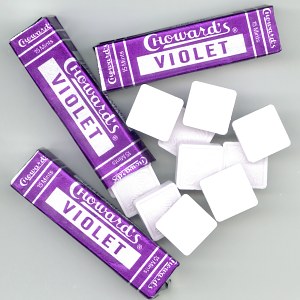
My Favorite Candy You May Never Have Heard Of

Though I discussed my favorite Halloween candy last month, those were obviously the conventional sorts of things with which any child would be familiar.  But there is one sort of candy I like very much, yet don’t see very often; they’re called Violets and most people who know them at all tend to fall into two camps:  they either love them or hate them.  Obviously I’m in the former group, but my old friend Charlie declares that they “taste like soap”; I presume that’s because he thinks of flowers as something to smell rather than eat, but he’s not alone in the opinion.  I was very glad to discover they’re available online, because that means I’ll always be able to get them without having to find one of the rare stores that still carries them.

My Favorite Food You May Never Have Heard Of

Obviously, this is a much larger category than candy, and it’s likely that I cook a number of things with which many of you might be unfamiliar.  But there’s one dish I make often, yet have never heard anyone outside my family mention nor seen it on a restaurant menu; it’s the Hungarian version of a broad class of dishes in which chicken is cooked in some liquid in a skillet, and is thus related to coq au vin and chicken cacciatore.  This one is called chicken paprikash, and it’s very easy but delicious:

1)  Cook about 1 kilogram (2 to 2.5#) of chicken parts (leg quarters work best) in about 3 tablespoons (45 ml) of oil in a large skillet for 15 minutes, turning pieces to brown evenly.  Sprinkle pieces with salt and pepper, then remove them from the skillet and set them aside.

2)  Add 1 large onion, chopped up to the hot oil along with 1 heaping tablespoon (about 20 ml) paprika, and cook until the onion is tender.  Return the chicken to the skillet, turn the pieces to coat them with the paprika mixture, then add ¾ cup (180 ml) of chicken broth and ¼ cup (60 ml) of dry white wine (or just 240 ml of broth) and bring to boiling.  Reduce heat, cover and simmer for about 40 minutes, turning the pieces over every 15 minutes, until the chicken is done.  Remove it from the skillet again and keep it warm.

3)  Stir together 1 cup (240 ml) sour cream and 2 tablespoons (30 ml) flour, and add the mixture to the skillet; cook over medium heat until thickened and bubbly, then 1 minute more.  Serve sauce and chicken over hot cooked noodles, Hungarian dumplings or even rice.

Hungarian paprika is much hotter than the typical Spanish variety, so if you like your food spicy you may want to go out of your way to get some (though it’s still a treat either way).  Obviously, the best time to cook the noodles is while the chicken is simmering.

My Favorite Game You May Never Have Heard Of

I love board games, and have since I was old enough to play them; one of these days I’m going to do a column on my favorite games in general, and Switchboard  is one of them.  I’ll be very surprised if any of you who isn’t a die-hard game geek has ever played or even seen it, but it’s been one of my favorites ever since I bought it at a TG&Y store with birthday money when I was about 10.  Like all the best board games it is simple to learn, yet allows for strategic thinking; it starts out as a straightforward two-dice race game, but because the board is composed of moveable tiles the players can work to shorten their own paths to the finish while also trying to cut one another off.

Read Full Post »

Anything worth doing is worth doing well.  –  English proverb

I’m often kidded for eschewing “smart phones”, driving decades-old cars, and the like; though I’m not averse to new technology, neither am I involved in the typical mad dash to embrace it simply because it is new.  I tend to react to new ways of doing things with the same skepticism I apply to everything else:  I ask, is there really anything wrong with the way I’m doing it now?  Does this new approach somehow substantially improve upon it?  Does it save time, cost less, give better results, etc?  Is the new solution actually inferior to the old in any way?  And if the advantages outweigh the disadvantages, does the degree of improvement justify whatever trouble or expense is involved in the switch itself?  Sometimes, my decision is in favor of change, which is why I embraced Twitter, now make extensive use of embedded video and bought my DVD burner when they were still rather pricey.  But other times I conclude that there is insufficient reason for change, or even that the “new and improved” method is anything but; this is why I still make popcorn the old-fashioned way.

My younger readers may not remember a time when popcorn was made in a pot rather than a microwave oven, but this innovation was actually fairly recent (dating to 1989).  Since I had already perfected my popping technique about 5 years before that I was, as you might expect, in no great rush to try out this “improvement” (especially since I didn’t even own a microwave oven until 1991).  I can’t tell you exactly when I first tried it, but I suspect it was when someone made a bag in the library break room; I can, however, tell you that I was wholly unimpressed with it.  Though it smelled just as delicious as regular popcorn, it suffered from the same problem as air-popped corn:  the absence of oil in the popping process resulted in dry flakes to which salt would not adhere, thus producing a product roughly as appetizing as Styrofoam.  And though the industry rapidly solved that problem with artificial butter and flavor coatings, the last batch I tasted (perhaps three years ago) was still noticeably inferior to proper popcorn, and the plethora of unpopped kernels invariably left behind offend my Scottishness.  Furthermore, I’ve always been at a loss to understand why anybody with access to a stove would bother with it; microwave popcorn takes just as long to prepare, and it’s dramatically more expensive.

But a couple of weeks ago, I saw news of concerns that the chemical diacetyl, which is used in microwave popcorn’s butter flavoring, could be much more toxic than previously believed, and though I’m not one to encourage food panics I thought that those readers who are concerned, or who just want to eat real popcorn at home again, might appreciate Maggie’s very own method of preparing perfect popcorn.

What You’ll Need

First, get a bag of cheap popping corn from the grocery store.  Don’t waste your money on “gourmet” popping corn; once you get the hang of it you’ll find that even the cheapest generic corn produces exactly the same big, fluffy flakes with very few unpopped kernels.  Next, the oil:  I usually use a mixture of vegetable oil and bacon grease, but I honestly think you can use soybean oil, rapeseed (canola) oil or whatever other liquid oil (not shortening or butter) you have handy without materially altering the results.  You’ll also need butter or margarine; modern “spreads” which are less than 50% fat actually work best, but if you want to use butter or high-fat margarine I’ll tell you how below.  You’ll also need a standard-sized brown paper grocery bag, and table salt plus whatever other seasonings you fancy (you can even use seasoned salt or a spice mixture).

The pot is the most critical component of the process.  Choose a light two-quart saucepan; I find aluminum works best, but a thin-walled steel pot should do just as well.  Do not use a heavy iron or steel pot; it will heat too slowly for this purpose, and its weight will make the vigorous shaking necessary for popping too difficult (and probably damage your burner in the process).  Repeated use over high heat will destroy Teflon, so you might select an old pot whose coating has fallen apart.  The lid should fit snugly, but not lock on; a too-loose lid may come off while you’re shaking the pot, but a locked one will not allow room for expansion.  Once you find a pot that works perfectly, hold onto it; I’ve been using the same one for about 25 years.

The Method

1)  Place the pot on the largest available burner and add 3 tablespoons (45 ml) of oil; measure out 1/3 cup (80 ml) of popping corn, open the paper bag and place it nearby on the counter or floor.  Finally, place the pot lid upside down within reach, and put a heaping tablespoon (roughly 20 ml) of margarine in it; if using butter or full-fat margarine use half as much and put a scant tablespoon of water (about 10 ml) in the lid as well.

2)  Turn the burner to high heat, and pick up one popcorn kernel.  When the oil starts to smoke, throw the kernel into it and wait.  When it pops, add the rest of the popping corn and then turn the lid over onto the pot; the margarine or butter and water will fall into the hissing oil when you do so.  If the oil starts to smoke a lot more before the test kernel pops, proceed as if it had popped because you may have inadvertently chosen a bad kernel.  Proper oil temperature is very important; the water (or water component of the margarine) helps to moderate it so most of the corn reaches popping temperature at the same time (rather than over a long stretch of time as microwave popcorn does).

3)  As soon as the lid is on, start shaking the pot vigorously back and forth; the idea is to heat the kernels evenly and keep the popped corn from sticking to the pot.  You don’t need to look like you’re trying to erode the burner with friction, but don’t be too prissy with it either.  After a little while (roughly a minute, maybe less) you’ll start to hear popping; if you’ve done everything right it will all pop pretty quickly after that point, and you may find the popped corn actually lifts the lid off of the pot!  Don’t worry if that happens; it means you’ve done everything perfectly.

4)  Once the popping slows down turn off the heat, but keep shaking the pot until the popping stops; then, dump the popcorn into the brown paper bag.  If you’re making more than one batch, do so; you want to be finished popping before moving on to the next step.  A standard paper bag can comfortably fit two batches, but you can make it work for three.

5)  Salt the popcorn, then roll the top of the bag down some and hold it tightly.  Shake the bag to distribute the salt, turning it upside down and sideways to get good coverage.  Taste the popcorn, repeating the salting and shaking process if necessary, then add whatever other spices you like and shake again.  If you’re using seasoned salt, this is all one step.  Once you’re satisfied, cut the top off of the bag and serve the popcorn from the bottom half.

6)  Don’t be discouraged if it isn’t perfect the first time; popping corn is so incredibly cheap you can try again without much waste.  The most common problems result from oil temperature: if the popcorn burns you need to shake more or use more water/margarine, but if the corn pops slowly or the finished flakes are small, hard and not puffy, it means you used too much water or margarine.  Also, don’t be afraid to experiment with flavors; we like to use Tony Chachere’s or pepper and garlic, but I use all sorts of different things (even grated parmesan cheese).  Enjoy!

Read Full Post »

A piece of French bread
With which to wipe my bowl,
Good for the body, good for the soul.
It’s a little like religion
And a lot like sex.
You should never know
When you’re gonna get it next.
At midnight in the Quarter or noon in Thibodeaux
I will play for gumbo
Yes, I will play for gumbo.
  –  Jimmy Buffett, “I Will Play for Gumbo”

In my Imbolc column I promised you my recipe for gumbo, and my husband took some pictures while I was preparing it that day so I could illustrate the finer points.  It’s not especially difficult or complicated, but there are a few terms and techniques with which people who aren’t from south Louisiana might be unfamiliar.  This is actually my second sister’s recipe; she and I are the best cooks in the family, but while I’m a generalist she is a specialist:  I cook many things very well, but she cooks a smaller number of things extremely well.  So when I somehow managed to misplace my old recipe eight or nine years ago, I called her to replace it and she gave me this one, which she had perfected over years of repeated preparation.

First of all, gumbo (for those who don’t know) is a thick soup of French Creole origin; like many Creole dishes it is a fusion of African and French elements.  There are many kinds of gumbo, but the three most common are shrimp and okra gumbo, seafood gumbo, and chicken and andouille gumbo.  Okra is a pod eaten as a vegetable, and andouille is a kind of sausage; since I dislike okra intensely I never make gumbo with it, and seafood gumbo has no specific ingredients (one uses whatever crustacean or mollusk is available).  This recipe is for chicken and andouille gumbo, which is both the easiest for a beginner and (in my opinion) the tastiest.

Let’s start with a few terms.  Andouille (ahn-DOO-wee) is a smoked, coarse-ground pork sausage spiced with pepper and garlic.  It is extremely important that you NOT confuse it with the French andouillette, which is a tripe sausage with a powerful odor and a taste politely described as “earthy”.  If you can’t find andouille where you live, see if they’re selling anything as “Cajun sausage”, and if that fails ask the butcher for a firm, spicy pork sausage; it will probably be close enough to work once it’s all cooked in the gumbo.  The firmness is important; the andouille is skinned before cooking, so a too-soft sausage will crumble and that’s not what you want.  My sister and I are so picky about it that we only buy it from one particular butcher, Bailey’s Andouille in LaPlace, Louisiana (about 30 miles west of New Orleans).  LaPlace styles itself “the Andouille Capital of the World” and Bailey’s is the best store there.  And they do ship, so American readers can get the real thing for just a few dollars more.

Next, there’s the matter of roux (pronounced “roo”).  Every Louisiana girl worth her salt can make a roux, but for some reason this useful culinary technique is less common outside the Deep South so I’ll tell you how to make one:  in a saucepan over medium heat, combine equal quantities of cooking oil and white flour and stir with a wooden spoon until the mixture is smooth and all lumps are gone (usually less than a minute).  That’s it.  Simple, isn’t it?  What I just described is a “white roux”; the only difference between it and a “brown roux” is that one keeps cooking the latter until it turns brown, stirring constantly.  The only two secrets to making a proper roux are 1) don’t be in a hurry; and 2) don’t be lazy.  If you turn the heat above medium or stop stirring, you’ll burn it and will be forced to start again.  Roux is a thickening agent; it’s the first component of many gravies and also thick Creole soups (like gumbo).  White roux is good for milk gravy or cheese sauces, brown roux is used for brown gravy, and a very dark roux (see recipe below) is for gumbo.  As a rule of thumb, each tablespoon (15 ml) of flour will thicken ½ cup (120 ml) of thin fluid such as broth or ¾ cup (180 ml) of a thick fluid like milk.  Those proportions don’t hold for gumbo, which is obviously thinner than gravy.

Finally, the Creole spice mixture; I use Tony Chachere’s Original Creole Seasoning, which is available in most American grocery stores and on their website.  You can probably use any Creole or “Cajun” seasoning mixture, though.  Now without further ado, the recipe itself!

Chicken and Andouille Gumbo a la Maggie’s Little Sister

One whole chicken or 8 parts (legs and thighs are best), skinned
1 # (450g) andouille, skinned and cut into small pieces
1 cup (240 ml) all-purpose flour
1 cup (240 ml) vegetable oil
1 large white or yellow onion
2 green onions
Creole spice mixture
Cooked rice

1)  On the day before the gumbo is to be served (if at all possible), skin the chicken and cook it in 1 gallon (about 3.9 liters) of water with 1 tablespoon (15 ml) of the spice mixture.  Don’t be tempted to leave the skin on the chicken; it makes the finished gumbo far too greasy (I always fry the skins up in a skillet later and give them to the dogs as a treat).  With the pot covered, you can use a fairly low heat; cook the chicken until the meat entirely falls off of the bones, checking about every half-hour and removing the bones as they come free.  Let the pot cool, then strain the broth and store it in a clean, covered glass jar (like a pickle jar), adding water if necessary to bring it back to 1 gallon.  Remove any remaining bones and gristle from the chicken and put it into a (separate) covered container; store both broth and chicken in the refrigerator overnight.  You could actually do this step two or three days in advance if you like.

2)  When you’re ready to make the gumbo, skin the andouille and cut it into small pieces.  Then chop the onions (chop the white or yellow onion as finely as you can, but the green onion bits should be large enough to be identifiable).

3)  In a large, heavy skillet, combine the flour and oil and cook over medium heat, stirring constantly with a wooden spoon, until the mixture turns a rich brown (see photo); this takes about 30 minutes.  The cooked roux will exude a strong, characteristic aroma which you will always be able to recognize thereafter.  Once the roux is brown enough add both types of onions and sauté for a minute or two, then add the andouille and cook it until the meat is hot (about four more minutes).

4)  Transfer the entire contents of the skillet to a large pot, then add the broth, the cooked chicken and 1 tablespoon (15 ml) of the spice mixture.  Cook and stir the mixture over low heat until well-combined (about 10 minutes; you’ll be able to tell when it’s mixed enough), then cover and cook over low heat for about two hours, stirring occasionally.  The gumbo’s appearance won’t change much after the initial stirring, but the aroma will grow stronger and richer.

5)  Serve the gumbo over cooked rice.  You don’t want a tremendous amount of rice; for a large (main course) bowl of gumbo, use less than ½ cup (120 ml) of cooked rice.  Refrigerate leftovers, and if possible reheat them on the stovetop rather than in the microwave.

And that’s it.  The most important thing is the roux; once that’s done the rest is really just stirring and waiting.  If you have any questions, just ask them in the comments.  Bon appétit!

One Year Ago Today

“Misrepresentation” looks at an attempted comment by a person who represents herself as a “survivor” and indulges in various propaganda techniques which reveal her as either a brainwashed “john school” type, a cop, or something worse.

Read Full Post »

On the twelfth day of Christmas
My true love gave to me
Twelve drummers drumming
Eleven pipers piping
Ten lords a-leaping
Nine ladies dancing
Eight maids a-milking
Seven swans a-swimming
Six geese a-laying
Five gold rings
Four calling birds
Three French hens
Two turtle-doves
And a partridge in a pear tree.
–  Traditional Christmas carol

Today is the twelfth day of Christmas and tonight is Twelfth Night, traditionally celebrated with parties and feasting.  It is the eve of the Epiphany, the day on which Christian myth holds the Magi arrived to give gifts of gold, frankincense and myrrh to the infant Jesus.  Because of this it was the custom in medieval times to exchange Christmas presents on that day, and Twelfth Night was the celebration preceding the exchange.  Even after the gift exchange moved back to Christmas Day proper in the Renaissance, Twelfth Night continued to be celebrated as the transition between Christmastide and Carnival (which starts tomorrow), and in some countries children still receive their presents tonight (as we’ll see in tomorrow’s column).  And though many Americans take down Christmas decorations by New Year’s Day, all good New Orleanians leave them up until Twelfth Night and remove them on Epiphany.  In modern times a bit of confusion has arisen, so that many (especially in New Orleans) believe Twelfth Night to be the 12th night after Christmas rather than the 12th of Christmas, i.e. the night of January 6th.  But whatever terminology one prefers, tomorrow is the first day of the Carnival season and today the last of Christmas.

Remember the old Saturnalia inversion of the social order we talked about before?  In Christian times this portion of the festivities was shifted to Twelfth Night celebrations.  The masters waited on their servants and everyone shared a cake which contained a bean; whoever got the bean became the Lord of Misrule, the ruler of the feast.  This went on until midnight, when Christmas ended and the world returned to normal.  But the cake survived and in France became much more elaborate; eventually the bean was replaced by a figurine of a baby representing the Christ Child.  These cakes, called “king cakes”, are in New Orleans eaten throughout the Carnival season; every bakery in New Orleans sells them by the thousands at this time of year, and a few die-hards like myself bake our own.  New Orleans king cake is actually a species of brioche, and as such is related to the German stollen and the Italian panettone; it is generally decorated with sugars of purple, green and gold, and whoever gets the baby must host the next king cake party.  In offices, this tradition has devolved into “he who gets the baby buys the next king cake”, so as you can imagine a cheapskate might attempt to hide the fact that he found the tiny doll by shoving it into an uneaten piece when no one is looking, but if he is caught in the act considerable social censure results.

I’m sure at least SOME of you bake, and since you can’t buy a king cake in a grocery store outside Greater New Orleans I’ve decided to give you the recipe.  Remember, you can ONLY eat this cake between tomorrow (January 6th) and Mardi Gras (Shrove Tuesday), which falls this year on March 8th.  If you can’t find a plastic baby, just use a bean as they did in the Middle Ages.  I’m afraid all of my measurements are Imperial, so international readers will have to convert; in the US butter is typically sold in pounds, with each stick equal to ¼ pound, but I have seen half-size sticks in California so please check your carton carefully.  DO NOT use margarine; modern margarines are an emulsion of oil and water with very different chemical properties from real butter and the yeast will not rise properly if you substitute.  Since the dough must sit overnight, you’ll have to start your cake this evening if you wish to serve it tomorrow.

King Cake

4¾ cups flour
1 cup sugar (divided usage)
1½ teaspoons salt
2 packages rapid-rise yeast
¾ cup milk
½ cup water
½ cup (1 stick) butter
2 large eggs
¼ cup (½ stick) melted butter (used on second day)
1 tablespoon ground cinnamon (used on second day)
1 recipe powdered sugar glaze (see below)
Colored sugars (see below)

1) In a large bowl, combine 1½ cups of the flour, ¼ cup sugar, and yeast.  In a small saucepan heat the milk, water, butter and salt until very warm and butter is almost completely melted; DO NOT omit the salt, because the yeast needs it to grow.  Add the milk mixture to the dry mixture and beat on medium speed of an electric mixer for two minutes, then add the eggs and another ½ cup of flour and beat on high for two minutes (I always sing to the yeast to encourage it to grow, but I’m silly that way).  Stir in the remaining flour, then cover bowl with plastic wrap and refrigerate overnight (8-24 hours).

2) Punch dough down and remove it to a lightly floured work surface, then combine the cinnamon with the remaining sugar and mix well.  Divide the dough into three equal pieces and roll each into a 28” long by 4” wide strip (I find it easier to roll it into a 14” x 8” strip, then cut it lengthwise and join the pieces end to end).  Brush the rectangle with a third of the melted butter, sprinkle evenly with a third of the cinnamon-sugar mixture and roll it up tightly to form a long rope; don’t forget to put your baby or bean at a random spot on one of the rectangles before rolling it up.  You’ll probably need to pinch and manipulate the ropes a little to get the edges to seal.  Braid the three ropes together, then bring the ends together and pinch to join them so the cake is an oval.  Carefully transfer to a greased baking sheet (I find it’s easier to do the braiding on the sheet) and let rise in a warm, draft-free place for one hour.

3) Bake at 375 degrees Fahrenheit for 25 to 30 minutes (finished cake will sound hollow when tapped).  Carefully free cake from sheet and slide it cautiously to a wire rack to cool; meanwhile prepare colored sugars and powdered sugar glaze.  When cake has cooled slightly spread the glaze over it and then sprinkle the colored sugars on as in the picture; there is no way to do this without making a huge mess so you may as well just enjoy it.

Colored sugars:  For each color place ¼ cup of sugar into a Tupperware-type sealable container, add food coloring, seal container and shake vigorously (make sure you use a container with a trustworthy lid!)  For green sugar use 4 drops of green food coloring, for gold use 4 drops of yellow, and for purple use 4 drops of blue and 8 of red.  Unused sugars will keep indefinitely if sealed tightly in a cool, dark place.

Powdered sugar glaze:  Combine two cups of sifted powdered (confectioner’s) sugar and two or three tablespoons of milk; stir until smooth and use immediately.

Don’t forget to start the cake the night before you plan to serve it to company; the rolling and braiding may sound complicated but actually takes only about half an hour.  This cake is best enjoyed in good company with a tall glass of cold milk or a large cup of strong, hot café au lait.

Since most of your friends probably don’t bake and king cakes probably aren’t commercially available where you live, you’ll have to start your own tradition about the baby or bean; just make sure it’s something fun and in the spirit of hospitality.  And if any of my English readers has a recipe for wassail (a traditional punch drunk throughout Christmastide and especially tonight), please feel free to share it!

Read Full Post »

« Newer Posts