Feeds:
Posts
Comments

Posts Tagged ‘orgasm’

We hear only those questions for which we are in a position to find answers.  –  Friedrich Nietzsche

It’s time once again for me to answer reader questions!  If you have one of your own, please email it to me and I’ll be happy to answer you to the best of my ability.

I wondered could you give me a quick definition of archeofeminism and how it differs from neofeminism?

What I call “archeofeminism” is the exact opposite of “neofeminism”.  “Archeofeminism” (from the Greek “archeo-” meaning “old”) is the recognition that men and women are already socially equal by nature, and the only way in which we become socially unequal is by the actions of laws.  Archeofeminists recognize that men and women are by our very natures different; we think differently, act differently and want different things, so though it’s good for a society to say “individuals can pursue whatever path they like,” it’s stupid to expect that large numbers of women will ever want to act and live like men, and forcing people to pretend otherwise is tyranny.

“Neofeminism” (from the Greek “neo-” meaning “new”) is the belief that there are no natural behavioral differences between the sexes and that all gender (other than genital dimorphism) is “socially constructed”.  Neofeminists believe that if infant boys were “socialized” in the same way as girls they would act exactly like girls, even into manhood.  Furthermore, since neofeminists don’t believe in sex differences they believe the female standard of behavior is the only “right” one, and that male behavior is therefore pathological.  Paradoxically, they also believe that power systems arising from natural male behaviors (such as corporate and professional hierarchies and externalized validation) are preferable to less competitive female norms, and that women “should” seek externalized achievement, competition and validation as men do.  The upshot of all this is that they advocate the brutal legal suppression of all traditional gendered behavior, whether public or private; they believe that women who make their livings by traditional female paths such as sex work or marriage should be forced into male-like careers, and that sex should be entirely controlled by the state so as to promote neofeminist ideas of “equality”.  Ultimately, most of them would probably like to see the development of parthenogenesis so that men can be entirely eradicated.

Since you’re a former sex worker and current wife I’m interested in your take on the “Obedient Wives Club”, a bunch of wives who blame high divorce rates and the like on wives not satisfying their husbands.  They’re obviously a fringe group, but I get the sense they’re getting at something real.  How many husbands with neo-feminist influenced wives are unhappy?

In some aspects of their beliefs they’re in the general vicinity of something real, while in others they’re pretty distant.  It’s obviously a dramatic overstatement to claim that “all” male-female issues are the fault of rebellious wives; if couples took the trouble to find out what each needed from the other and to clearly set forth their expectations and make honest compromises and realistic promises, there would be a lot fewer unhappy marriages.  IMHO a lot of the dissatisfaction and unhappiness of modern women derives from neofeminist teachings, specifically the ones which concentrate on a woman’s “rights” in a marriage while pretending that the man has none, the denial that relationship sex is transactional, and the refusal to accept that most men are by nature dominant and tend to feel unhappy and restless if they feel their lives are out of control.  A wife who constantly argues about everything and insists that even the smallest details of domestic arrangements be negotiated (except for sex, over which she retains absolute control) is going to make her husband miserable…and usually herself as well.

I’m sure you’ve read about how transsexuals and closeted homosexuals are usually unhappy as teenagers; they have far higher suicide rates than other adolescents and their early relationships are nearly always troubled.  Why?  Because they’re trying to be something they’re not.  When one is forced by social pressure to conform to a mode of behavior at odds with one’s guts, one is bound to be miserable and to make others miserable as well.  Certainly there are some women who really do prefer to “wear the pants” in a relationship, or who really do enjoy discussing everything to death, but the majority of women are unconsciously disappointed when their husbands allow them to run all over them, and it rots the relationship from within.  This is because most women are attracted to strength and competence in men, and find male weakness and submissiveness repulsive.  The neofeminists claim that’s due to “social construction of gender”, but tell that to lions, bears, elephants and most other mammals.  Most women who try to convince themselves that they don’t want a strong man, and indeed tell every man within earshot the same thing, are miserable if they get what they claim to want and miserable if they don’t because their minds and their spirits are going north and south.  This does not mean I believe this club is right in espousing unquestioning obedience; though some women can handle that sort of relationship and even thrive in it, it isn’t for everyone.  Most women absolutely do want their voices to be heard and their wishes considered; they just don’t want a spineless wimp.

For the sexual part, they’re pretty close to the mark, though they again assign too much weight to the woman’s behavior.  Men crave sexual variety, so even if a wife gives a man everything he wants in bed he may still stray, and if he does so she had better hope he goes to one of those prostitutes the club hopes to drive out of business rather than some available bit of amateur tail.  I do think that most men’s need for variety can be satisfied by sexual experimentation and fantasy inside the marriage, though, and that a wife who gives a husband what he wants in bed as often as he wants it, dramatically increases the chance for a happy, fulfilling marriage for both parties.

I haven’t had very many sexual relationships in my life, and have become so used to masturbation that I can’t have orgasms with other people.  I would very much like to be able to orgasm with my girlfriend, but haven’t been able to yet; do you think that a professional sex worker could teach me to have an orgasm with a partner?

I think it’s certainly possible that an experienced pro might be able to teach you, but of course it depends on your finding the right one.  I suspect your problem might be due to performance anxiety, which means a man worrying that he won’t do a good job, that his partner will be unsatisfied or even look down on him (especially if he climaxes too quickly).  Men who suffer from this worry so much that they often can’t climax at all, which is much worse than coming quickly!  The main cause of the problem (which is far more common than it used to be) is that men are constantly bombarded with the ridiculous idea that women just want to be pounded for hours, and that if the man orgasms too quickly the woman is angry.  While in many cases that may be true to a degree, what men think is “too quickly” and what is really too quickly are two different things; as long as a man can keep going for five minutes, that’s plenty for most girls no matter what porn tells you (especially if he gives her plenty of foreplay).  Many women can’t even achieve orgasm from intercourse at all, and for those oral or manual stimulation is much more important than an interminable simulation of a piston in a cylinder.

The reason a good pro might help is that you don’t have to care about her satisfaction; she is there to help you with YOUR needs, and therefore you can orgasm any time you like without having to worry as you might with a woman you love.  It may take a few sessions before you can achieve orgasm with an escort, and you’ll have to decide for yourself whether several sessions with one girl or with different girls might be better (my instinct is toward the latter because you don’t really want to get too comfortable with one woman; the idea is for her to be a stranger).  If I’m right, once you are able to orgasm with a woman you should be able to achieve it with your girlfriend because the mental block will be broken.  It’s certainly worth a try, and if it doesn’t work you can always try a sex therapist.  The most important thing is that you don’t get discouraged; if your anxieties are causing the problem, the more you worry the worse it will get.
Read Full Post »

Sex is between the ears as well as between the legs. –  H.L. Newbold

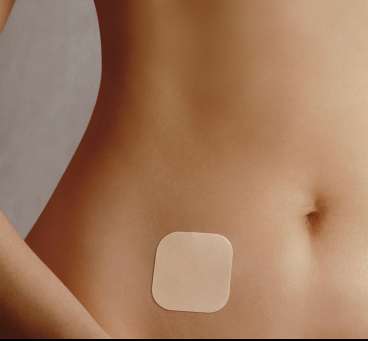
There was a big discussion recently in the comments following my July 24th column about male sexuality vs. female; though I insisted that it’s a difference of kind rooted in brain architecture, regular reader Asehpe wondered whether it might not simply be a difference of degree deriving from men’s much higher testosterone levels.  I’m sure all my readers realize that men’s testosterone levels are much higher than women’s, but some of you may not realize just how much higher: the normal male level ranges from 300-600 nanograms/milliliter of blood (ng/mL) while the normal female level is only 10-30 ng/mL.  In other words, the lowest normal male level is still ten times the highest normal female level.  And since degree of sex drive is roughly related to testosterone levels in both sexes, it should come as no surprise that men tend to be such horny beasts in comparison with women.  Because the ovaries produce most female testosterone (a small amount comes from the adrenal gland), women’s levels often drop dramatically after menopause and their sex drives often drop with the level. Some such women get positive results from a testosterone patch, but many others don’t, and some women don’t experience any noticeable dip in sex drive after menopause.  And that brings us to this article by Dr. Ricki Pollycove which was published a week ago Wednesday (January 26th) on Huffington Post; she talks about the complexities of female sexuality and why testosterone isn’t always the answer, and in light of the previous discussion I thought my readers might be interested.  IMHO, it tends to support my position that the male/female sex drive difference is one of brain-based kind rather than testosterone-based degree, but read the article and decide for yourself; here are a few highlights.

…There are many complexities to the science regarding testosterone and its androgen cousins…The actual science of measuring testosterone (T) in women is where a lot of our problems begin.  The levels found naturally in women are less than a tenth of those produced by 30-something aged men.  With such a small female range of “normal,” the individual difference between our cyclic high point (right around ovulation in menstruating women not using hormonal contraception) and the pre-menstrual period low is relatively small.  And on top of this, the T levels between different women vary considerably.  And to make it an even tougher puzzle to solve, a particular T level, as measured by the most accurate blood testing methods, does not correlate with better or worse sexual satisfaction when different women are compared to each other.  So even if you get the best “gold standard” testosterone blood test and “know your numbers” it may not correlate with your personal experience one way or another…

In other words, some women with comparatively low testosterone levels have higher sex drive and better sexual satisfaction than other women with higher levels; there’s no direct correlation between different women.  After my hysterectomy my endocrinologist monitored my hormone levels while we were trying to determine the best hormone replacement therapy (HRT) for me; upon discovering that my post-hysterectomy testosterone levels varied between about 2-5 ng/mL he asked if I had experienced any drop in sex drive and appeared surprised when I told him my desire had actually increased!

…Women who seek improved sexual function…are likely to get a blood test, often to find out that their levels of testosterone are considered “normal”…Depending on the T hormone study (often conducted by departments of psychiatry, where sexuality research is most at home in our culture), the strongest statement that stands up to rigorous science is that among women who complain of lackluster sexual functioning, added T can be of statistically significant benefit IF their blood levels…are below the middle third of the normal range.

What this means in English is that if a woman who complains of low sex drive has a low (10-16 ng/mL) testosterone level, giving her extra testosterone often (but not always) increases that drive, but if her levels are about 17 ng/mL or higher it doesn’t usually have any significant effect.

Part of the problem is how doctors research and measure sexual experience in women…Studies in women are more difficult as compared to men.  Male measures of orgasm/ejaculation are clear cut end points of sexual satisfaction whereas women have a less defined description of what constitutes satisfying sex with a partner.  With the mix of issues surrounding T measurement, absolute levels of T not correlating well with an individual woman’s sexual function and the placebo effect being very powerful with regard to sexual performance (30 to 40 percent improvement with the dummy pills or creams), it’s no wonder we are still stuck with a huge difference of opinion between professionals who take care of women’s hormonal balance…

It’s easy to tell if a man is aroused, and a healthy aroused man should be able to achieve orgasm, but it ain’t necessarily so with women.  The article states that “the ability to achieve orgasm is not highly correlated with T levels” in women, yet women who only think they’re getting a “horniness booster” still show 30% improvement even though it’s all in their minds!

…It may indeed be valuable to learn if your T level is in the lowest third of women, as this group is significantly improved with some added T support.  But the chances are that your blood levels are in the middle or upper third group of women.  You can try DHEA (over the counter) as T support if your blood T level is mid-range or at the bottom third. You may risk getting more pimples, especially on chin, nose, forehead and areas around the mouth with rising T levels, even when in normal ranges.  And too much T is NOT a good thing!  Beyond skin and hair changes (like zits and balding at the temples) there is a higher risk for a variety of diseases, like cardiovascular disease risk, stroke and liver tumors with overdoing it with T…

…The good news is that behavior modification can be a big help for many women.  Don’t take the laptop to bed.  Don’t watch TV in bed, dozing off next to your partner once again without so much as a good cuddle…Are you actually allowing arousal/foreplay activities before you hit the annoyance level?  So go ahead, take a combined approach of a medical and hormone evaluation plus enjoy the full spectrum of behavior modification activities…whatever suggests romance to you.  If we are to enjoy living with our partner beyond acting like parallel parked cars in a garage, it requires intentional efforts long term.

Here’s the meat; though some women’s sexual problems are indeed hormonally based and can benefit from replacement therapy if the levels are unusually low, most women’s sexual problems derive not from what’s going on in their bodies but from what’s going on in their heads.  Dr. Pollycove concludes the article with the statement “don’t just focus on testosterone as it may be less of a factor than we once thought,” and I heartily agree with her.  She and I are both experts in different aspects of human sexuality, but our experiences have in this case led us to the same conclusion via two different routes.  My low testosterone levels never affected my sex drive because I’ve always been open to sex; IMHO what’s going on in a woman’s bloodstream pales into insignificance beside what’s going on between her ears.

Read Full Post »

Sometimes the questions are complicated and the answers are simple. –  Dr. Seuss

In today’s column I’m going to answer some questions from my readers.  Some of these have been asked more than once, and some were asked by friends who knew me before I started blogging, while a few are new questions submitted to my email address (maggiemcneill@earthlink.net).  If there’s anything you want to know but don’t feel comfortable putting into a post reply (or just can’t find an appropriate post to attach it to), send me an email and I’ll answer it in my next mail column.  If you really need a quicker response let me know and I’ll answer you directly.  Unless directed otherwise, I will treat all questions as confidential and will not reveal the screen name of the asker.  We’ll start with one of the most commonly-asked questions of all:

How many men a day did you see?

For the first two years I worked (200-2001) I averaged about 16 calls a week, or as I thought of it “two per day and two for the week”.  But after September 11th, 2001 things slowed down for the convention business in New Orleans and my numbers began to fluctuate wildly; throughout 2004-2005 only about 10 per week.  After Katrina it shot way up since I was the “only game in town”; I asked my husband for an estimate last night and he thinks it was roughly 3-4 per day, which sounds about right to me.  In fact, my busiest day ever was December 1, 2005; I did 10 calls that day, and you had better believe I was exhausted and sore when it was done!  But things started to drop off after that, and when it dropped below an average of 1/day by late May I knew it was time to retire.

How did your husband feel about your working?

As I’ve said before my husband started out as my favorite client, so he had to face the reality of the situation from the very beginning.  After we got engaged he asked me not to do anything but bachelor parties, two-girl shows and the like, and I agreed.  However, due to unforseen financial difficulties which appeared near the end of 2003 I had to return to work full-time.  At first he took this philosophically, but once I started working it into a dominant/submissive fantasy for him (playing that he was “lending out” his slave girl) it actually began to turn him on.  I was always totally honest with him, and once he saw that it had no affect on my feelings for him he was able to enjoy the fantasy without experiencing any insecurity that I might become emotionally attached to another man.  We’ve discussed it since I retired, and we both agree that if I had to return to work for some reason it really wouldn’t be a big deal.  Which brings us to the next question:

Would you ever return to work for any reason?

I firmly believe that one should never say “never”.  If there were some compelling reason, I would certainly return to work, though I would have to find a way to do so without having to live away from home, as I’ve become to adjusted to my current mode of living and regular schedule to ever go back to city life and constantly being on call.  When I received this question I realized that one of my readers might one day ask to see me professionally, and I decided that I would agree to it on the condition that he pay me no fee, but instead make a tax-deductible donation to the WWAV “No Justice” Project.  I proposed this to my husband and he readily agreed.

What’s the difference between a courtesan and an escort?

“Courtesan” is an historical term for an educated, high-class prostitute who caters to men who want companionship rather than mere sex; she is the Western equivalent of a Japanese geisha.  In recent years some educated working girls have revived the term, and I’m very pleased that they have.  Unfortunately, by doing so they have inspired a host of imitators who just don’t get it; these wannabes seem to think calling themselves “courtesans” is just a convenient excuse to charge more.  I’ve actually seen some of these self-proclaimed “courtesans” publish lists of what courtesans do and don’t do, as though it were just a matter of following a checklist (the term “GFE” has experienced a similar degradation of late).  But I’ve got news for these ladies; “I am a courtesan” is not simply code for “I have a serious case of platinum pussy syndrome”.  If you can’t intelligently discuss a number of subjects (such as history, science, music, art, literature, philosophy, etc) in which your client might be interested, you aren’t a courtesan.  If you can’t make a client feel special and important or carry a conversation by yourself for four hours without his realizing you’re doing it, you aren’t a courtesan.  If you can’t listen to a man’s problems without judging and give him wise and compassionate advice on them, you’re not a courtesan.  And if you can’t ignore age, obesity, deformity, disability or just plain ugliness and look at your client for what he is inside rather than how he appears outside, you certainly aren’t a courtesan.  I could declare myself an empress, but that wouldn’t make it so, and a duck who proclaims herself a swan is still just a duck.

If it’s true that prostitutes have a lower incidence of sexually transmitted diseases than the general population, why is it that blood banks won’t accept blood from men who admit to seeing prostitutes?

They won’t accept blood from homosexuals, either; promiscuity of any kind is considered a high-risk behavior for blood-borne infections.  But beyond that, why do governments insist on equating voluntary adult prostitutes with enslaved teenage girls?  The answer to both questions is the same:  Superior authority does not grant superior wisdom.

Did your clients always expect you to have an orgasm too, or were they mostly concerned with you getting them off? And did you ever have an orgasm for real with any of your clients?

Most men enjoy giving women orgasms.  Males are highly achievement-oriented; their self-esteem depends upon being competent, and being perceived as virile and sexually potent is as important to the average man as being perceived as beautiful and desirable is to the average woman.  In the past men didn’t care much about giving women orgasms because female sexuality was viewed as a mystery, but once it became general knowledge that women can nearly always achieve orgasm through masturbation but not always through sex with a man, inducing orgasm in his partner became the goal of sex for many men.  The competitive, result-oriented male mind sees female orgasm as the target, the goal, the finish line of the “game” of sex, so his sexual pleasure is greatly enhanced if he can “score” it.

However, as you and I both know, it isn’t that simple.  For many women orgasm is more like hunting than it is like football; it’s not just a matter of aiming a shot with proper force and accuracy into a static area, but rather of hitting a moving target which may or may not elect to show itself on that occasion!  There are times when (for whatever reason) it just isn’t going to happen, but many men just can’t understand that and will refuse to stop trying; on those occasions a good fake allows the man save face and concentrate on what can be accomplished, namely his own orgasm.

And that’s only speaking of lovers; with clients orgasm is even more elusive, and indeed for some girls never shows its face in a commercial situation at all.  But this typical female condition is completely alien to the average man; he just can’t comprehend that the right combination of moves and techniques could through no fault of his own somehow fail to achieve what it was intended to achieve.  Even those men who intellectually understand this may have trouble grasping it on an emotional level, so it’s always best to give a man a good, convincing fake if one senses that it’s important to him or if he comes out and says “I want to give you pleasure, too” as so many of them do.  Obviously, this isn’t necessary if he just wants a blow job or comes very quickly with intercourse.

The answer to the second part of your question is yes.  It didn’t happen often, but sometimes things just clicked and I did indeed climax with a customer.  The irony in this, of course, is that it was rarely due to any technical “performance” on his part, but usually just because the situation was somehow unusually exciting or because I felt a stronger-than-usual connection with him. I had orgasms pretty consistently with some of my regulars, especially the one I called the Salesman, though in his case that was indeed due in part to his amazingly talented fingers.

In tomorrow’s column, more questions about hookers’ orgasms and customers’ choices.  See you then!

Read Full Post »

« Newer Posts